
Head and Neck Cancer
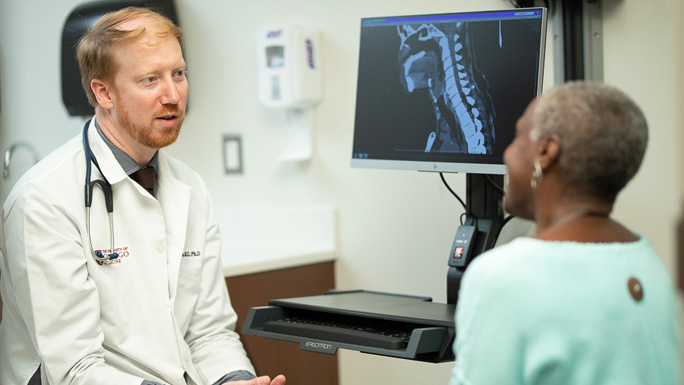
The head and neck cancer specialists at UChicago Medicine care for hundreds of patients each year, making our program one of the busiest programs in the country. Our expert team includes head and neck surgical oncologists, medical oncologists, radiation oncologists, reconstructive surgeons, radiologists, pathologists, speech/swallowing therapists, physical therapists, symptom management specialists and highly trained nurses.
Our multidisciplinary head and neck cancer team is nationally and internationally renowned for its expertise, leading-edge care and outstanding outcomes. Just as important, patients and their families recognize us for our extraordinary dedication to helping patients maintain the best possible quality of life during and after treatment.
At the Forefront of Head and Neck Cancer Care
UChicago Medicine offers leading-edge care for head and neck cancer, including the most advanced medical and surgical treatment approaches:
- Tailored care for HPV-associated head and neck cancers, including strategies to "de-escalate" the treatment and lessen the side effects of treatment for HPV-associated cancer. Our personalized approach decreases the intensity of treatment based on how well a patient's cancer responds to chemotherapy. After the chemotherapy shrinks the tumor, patients are treated with surgery and 40% less radiation focused on a much smaller area. This advanced approach resulted in the nation's leading survival rate for such cancers: ~95% of our patients were still alive after two years, and patients treated with less radiation were less likely to need feeding tubes. Learn more: PubMed study abstract or read the original study published in the Annals of Oncology (PDF)
- Organ-sparing combined radiation and chemotherapy approaches, which can cure locally advanced head and neck cancers of the tongue and larynx (voice box) without major surgery while preserving speech, voice and swallowing functions. UChicago Medicine pioneered this approach.
- State-of-the-art, minimally invasive surgical approaches for cancers in the throat, tonsils and base of tongue, including robotic surgery for the throat, laser microsurgery for cancer of the voice box and natural orifice surgery involving the transoral approach for thyroid disorders.
- Innovative surgical approaches, including transoral robotic surgery (TORS), a procedure that harnesses the power of robotics to access difficult-to-reach tumors through the mouth, which is less intense and better tolerated than open surgery.
Treating the Full Range of Head and Neck Cancers
Our head and neck cancer treatment team are experienced in treatment all forms of cancers of the head and neck, including rare cancers. Cancers we treat include-–but are not limited to–the following:
- Laryngeal (Voice Box) Cancer
- Mouth (Oral Cavity) Cancer
- Nasal and Sinus Cancer
- Salivary and Parotid Gland Cancer
- Skull Base Tumors
- Throat Cancer
- Tongue Cancer
- HPV-Related Head and Neck Cancer
Leaders in Head and Neck Cancer Research
Our doctors and scientists are committed to advancing management of head and neck cancer through research. Our team is continually conducting research into every aspect of this disease. Some of our key areas of research are:
- Providing less toxic, better-tolerated treatments for patients with HPV-associated head and neck cancers
- Expanding the use of immunotherapy, which harnesses a patient’s own immune system to treat cancer with fewer side effects
- Testing targeted therapies, such as drugs that fight against the cancer cells specifically
- Increasing cure rates by integrating new drugs with the initial dose of chemotherapy to shrink the tumor and potentially prevent it from spreading
- Testing new medications for recurrent and metastatic head and neck cancer
Convenient Locations for Cancer Care
Request an Appointment
To speak to someone directly, please call 1-855-702-8222. If you have symptoms of an urgent nature, please call your doctor or go to the emergency room immediately.
For Referring Physicians
To refer a patient for head and neck cancer care, please call UCM Physician Connect at 1-800-824-2282.
* Indicates required field