
Lung Cancer
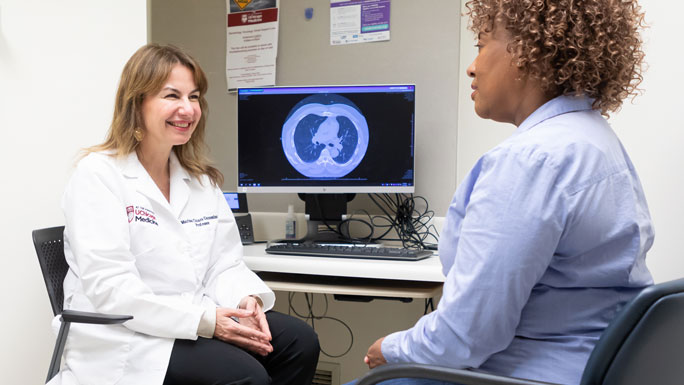
Someone is diagnosed with lung cancer every three minutes. But today, the outlook for a person with lung cancer is better than ever, thanks to better insights into the disease, new medicines, advanced technology and less invasive surgery. Most patients with lung cancer need more than one type of therapy as part of their care plan. Patients at the University of Chicago Medicine have access to a full range of treatment options, including surgery, radiation therapy and chemotherapy, well as clinical trials of the newest targeted treatments, including immunotherapies. We offer sophisticated and compassionate care to patients every step of the way.
Why Choose UChicago Medicine for Lung Cancer Care?
Where you or a family member with lung cancer starts the care journey matters. Choose Chicago's top-ranked cancer program, according to U.S.News & World Report.
Experienced Lung Cancer Specialists
Our lung cancer experts have more combined expertise than any other lung cancer physician team in Chicago. At UChicago Medicine, experts in eight specialties come together weekly to discuss their patients' progress, providing unique input so the team can develop the most effective lung cancer care plan for each individual.
Accurate and Less Invasive Diagnostics
Our pulmonologists biopsy some cancers without surgery and, in many cases, also treat cancer hidden in the airways of the lungs without invasive surgery. During fluorescence bronchoscopy, our pulmonologists use a thin, lighted tube to look for tiny tumors in the lungs. Bronchoscopy is just one of the many tools our team uses to develop an accurate lung cancer diagnosis.
Targeted Therapies: Matching Treatment to the Tumor
Genetic changes can drive a cell to become cancerous or cause cancer to spread. Our molecular pathology lab searches across more than 1,000 genes to screen for these mutations for every patient with lung cancer. Therapy can then be matched, or targeted to, the specific genetic changes in each tumor.
Minimally Invasive Lung Cancer Surgery
UChicago Medicine lung cancer surgeons are board-certified thoracic surgeons who focus on treating diseases only of the lung and chest. They perform surgery using minimally invasive techniques, which results in smaller scars, less pain and fewer complications after surgery as compared to traditional open procedures.
Precise Radiation Therapy
Our radiation oncologists are leaders in using the latest technologies for lung cancer — including four-dimensional mapping and image-guided treatment — to deliver targeted radiation therapy to the tumor, while sparing nearby healthy tissue.
Clinical Trials of Promising Therapies
Patients have access to clinical trials of the newest treatments, including immunotherapies that supercharge the power of the immune system to fight cancer. These treatments are not widely available and hold tremendous promise.
Lung Cancer Screening
When lung cancer is detected early, treatment can begin sooner, giving patients a higher chance of success. We use advanced tools and techniques to screen and monitor people at high risk of developing cancer. Low-dose CT scans are quick and painless diagnostic tests for detecting very small changes in the lungs that could indicate cancer.
Smoking Cessation
The most effective way to reduce your risk of developing lung cancer is to quit smoking. We provide a variety of programs for individuals whose addictions, lifestyle or medical histories put them at high risk for the disease.
Supportive Care and Aftercare
We take a holistic approach to helping our lung cancer patients, from diagnosis through treatment and aftercare. We support patients and provide hope for families through resources such as smoking cessation programs, physical therapy and nutrition, mental health and financial counseling.
Convenient Locations for Cancer Care
Request an Appointment
To speak to someone directly, please call 1-855-702-8222. If you have symptoms of an urgent nature, please call your doctor or go to the emergency room immediately.
For Referring Physicians
To refer a patient for lung cancer care, please call UCM Physician Connect at 1-800-824-2282.
* Indicates required field

Cancer Care Second Opinions
Request a second opinion from UChicago Medicine experts in cancer care.

