
Skin Cancer
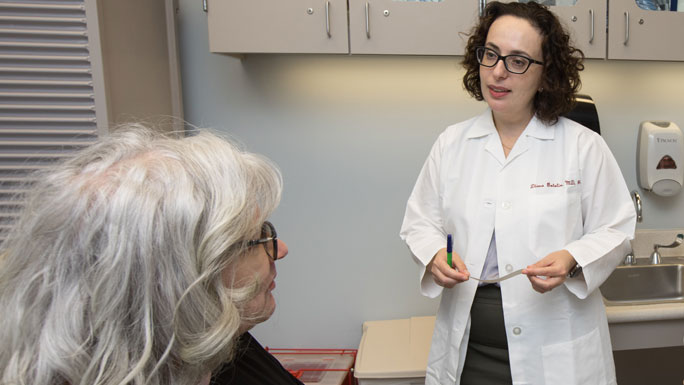
If you're concerned you may have skin cancer, the University of Chicago Medicine can help. There are several different types of skin cancer, and our physicians are experts in knowing how to diagnose and treat them. Often, the key to a cure is early detection. UChicago Medicine dermatologists offer the latest diagnostic tools to identify melanoma and nonmelanoma skin cancers. We also offer mole mapping, a noninvasive method to detect melanoma using digital photography to track changes in moles.
When facing skin cancer, patients need education as well as responsive care. Our skilled and attentive specialists offer this kind of assistance. This includes helping patients understand the biology of the disease, the therapy they will receive and how to manage any side effects.
Types & Symptoms
The three most common types of skin cancer are basal cell carcinoma, squamous cell carcinoma (both are often grouped in nonmelanoma skin cancers) and melanoma.
Because skin cancers are caused by the uncontrolled growth of skin cells, the first presentation is usually a visible change in a person's skin. Consult a trained physician immediately if you observe any of these warning signs associated with common skin cancers.
Risk & Prevention
The incidence of skin cancer has been increasing quickly for the past few years. One in two men and one in three women will develop nonmelanoma skin cancer in their lifetime. Once a patient has a nonmelanoma skin cancer, there is a much higher risk of developing more skin cancers.
Treatment Options
Nonmelanoma skin cancers are some of the most treatable cancers. When melanoma is caught and treated early (before it spreads to the lymph nodes), it is also highly curable. The goal of treatment for skin cancer is to remove, or excise, all of the cancer. Typically, the first line therapies are surgical.
Non-surgical treatments may be an option in some cases. Radiation, chemotherapy or immunotherapy may be necessary for advanced cases of skin cancer or when patients are unable to have surgery. Learn more about treatment for melanoma skin cancers.
The type of surgical treatment used depends on the type, size, depth and location of the tumor. In most cases, the procedure is done on an outpatient basis. The most common surgical procedures to remove cancerous areas of the skin are:
Convenient Locations for Skin Cancer Care

Cancer Care Second Opinions
Request a second opinion from UChicago Medicine experts in skin cancer care.

Related Services
Learn about related services for patients with skin cancer.

How Can We Help?
Useful Resources for Patients & Visitors